
What's up: Loving Winter Sports in a Warming World

In this month’s What’s Up student column, EUSA ESC volunteer Milena Alessandria reflects on her enthusiasm for winter sports and offers her perspective on maintaining love for them in a warming climate.
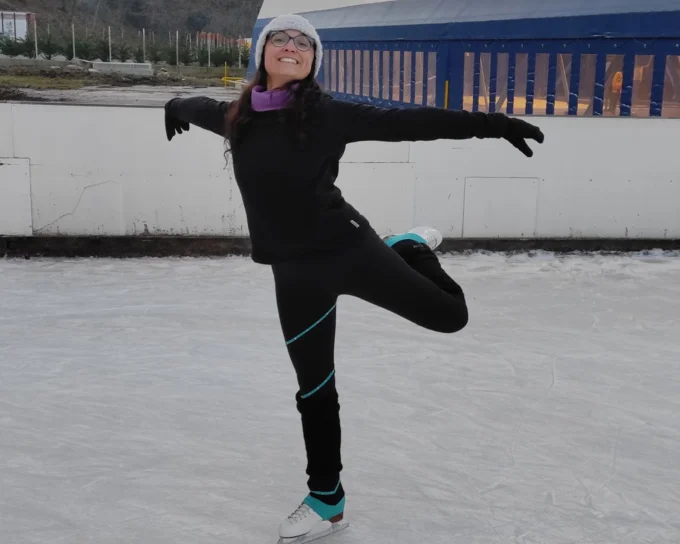
I fell in love with winter sports on the ice: ice skating rings were, and still are, my favourite place to relax and reconnect. Here, I discovered the joy and the sense of community that sport can create. Over the years, I have developed another deep interest: sustainability. I became increasingly aware of how climate change is reshaping the world we live in, with all its complexities, finding myself thinking about how winter sports can survive in a warming world and what can be done to reduce their environmental impact.
This personal reflection mirrors a much larger challenge that winter sports face today: skiing, skating, and snowboard are heavily affected by climate change. With rising temperatures, snow has become unpredictable, with far‑reaching consequences for mountain ecosystems, and deep impacts on winter sports enthusiasts and the many communities and local economies depending on winter tourism.
International events such as the Olympics help to illustrate the scale of the problem. Research shows that, if the current high-emission scenario doesn’t change, only 10 of the 21 cities that have held the Winter Olympics since the first edition in 1924 will remain climate reliable in the 2050s. The most recent Winter Olympics demonstrate this trend, having relied heavily on artificial snow: Sochi 2014 accounted for around 85%, PyeongChang 2018 for 90% and Beijing 2022 became the first Olympic Games to use nearly 100% of artificial snow. Today, around 95% of ski resorts globally already rely to some extent on snowmaking, and the demand for artificial snow is expected to increase in the coming years. Cortina, host of the upcoming 2026 Winter Olympics, is no exception.

Artificial snowmaking can help save winter sports events and skiing seasons, but it also raises important questions about its environmental footprint. Indeed, artificial snowmaking entails high water and energy consumption, leading to considerable negative environmental impacts. If the energy used to operate the snow guns is not sustainable, additional greenhouse gases are emitted, increasing the carbon footprint and contributing to global warming in a never-ending vicious circle. Moreover, as natural snow becomes scarcer, people may be pushed to travel to more distant and more snow-reliable ski areas, thus significantly increasing the overall CO₂ footprint of winter sports. In fact, flying accounts for approximately 80% of a ski holiday’s carbon footprint.
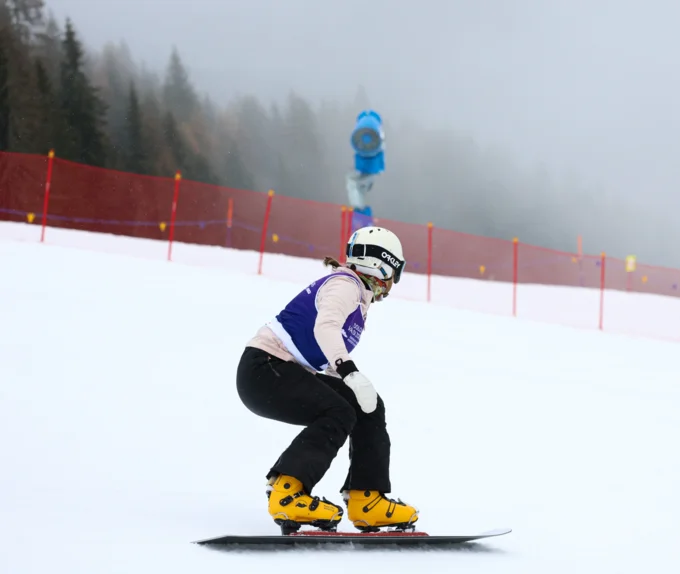
But there are reasons to be hopeful. Many winter sports stakeholders are pushing for changes and for the development of policies and practices that improve sustainability, acknowledging that this is crucial for the long-term survival of winter sports. Many ski resorts around the Alps and beyond are investing in greener solutions and aim for carbon neutrality. For example, French ski areas adopted in 2020 sixteen eco-commitments, with concrete measures related to greenhouse gas emissions, water management, protection of biodiversity and preservation of landscapes, including the goal of carbon neutrality by 2037.
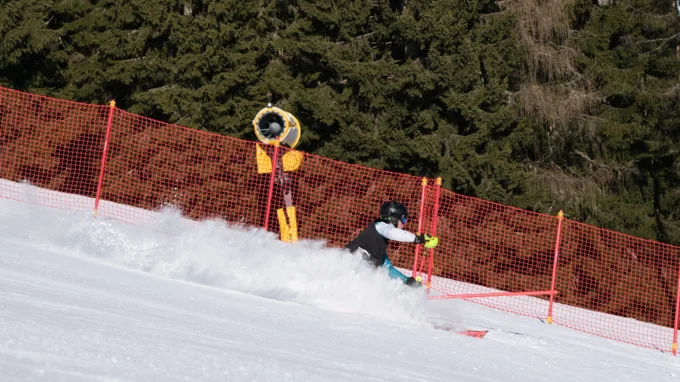
Even governing bodies are stepping in: in late 2024, the International Ski Federation (FIS) published a “Sustainability Guide for Ski Resorts”, outlining 14 key initiatives to reduce the environmental impact, including green energy, efficient lift operations and sustainable snow management, aiming for a net-zero goal by 2050. These guidelines also encourage sustainable travel, through educating skiers on the environmental impact of their travel, promoting the use of public transport such as trains, offering shuttle service and supporting carpooling.
Modern solutions are essential not only environmentally but also economically, because the future of winter sports depends also on their climate impact. Luckily, adaptation is already happening. Although it does not eliminate the environmental cost, it does make winter sports less resource-intensive and shows a shift in mindset. For example, using energy from renewable sources and energy-efficient technologies can considerably reduce CO₂ emissions for both lifts and snow operations. Indeed, modern snow cannons consume up to 80% less energy than old models.
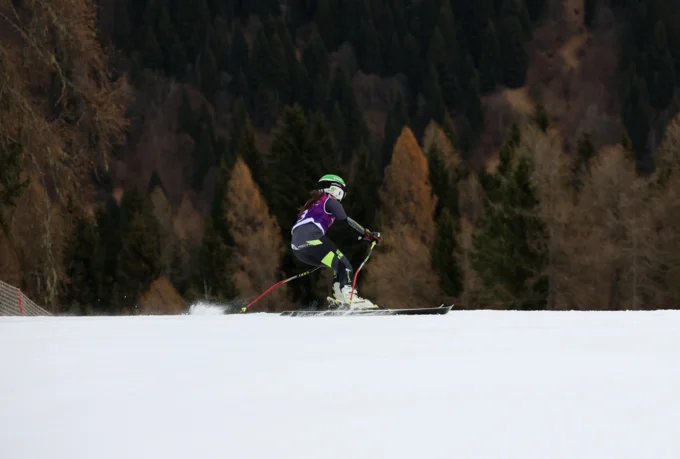
Another useful measure is snow farming, aiming at preserving natural and artificial snow, storing it under an insulating layer of sawdust or wood chips. This is done to guarantee snow for a sporting event on a specific date or, more commonly, to preserve snow over summer for using it at the start of the following winter, extending the skiing season without the need for energy-intensive snowmaking. Finland is leading the way with 200,000 cubic meters of snow stored each year and only 13% melting loss. High-altitude resorts in Switzerland and Austria are following the example.
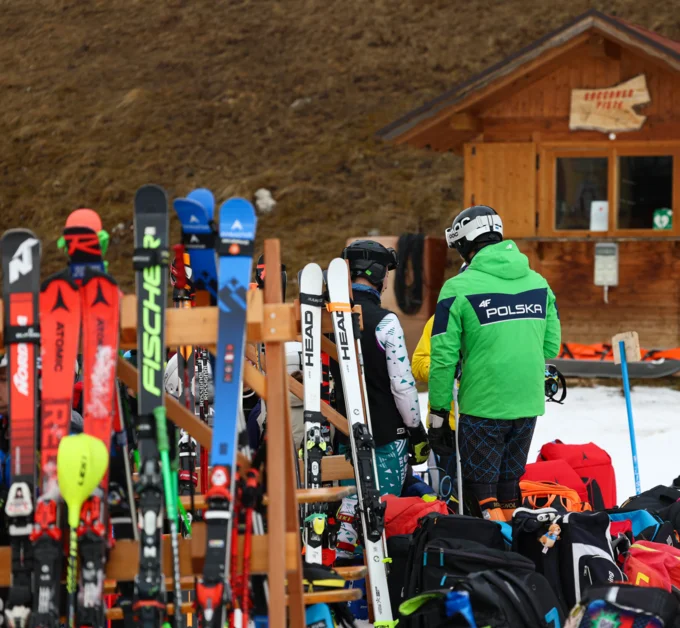
Beyond facing huge sustainability-related challenges, global events also serve as laboratories for solutions. In this regard, the Olympic Games have increasingly invested in sustainable practices to mitigate their massive logistical and energy demands. For example, all competition venues of the Milano Cortina 2026 Olympics will exclusively use electricity from renewable sources, as outlined in the latest “Sustainability, Impact and Legacy Report”. Building on the innovative footsteps of the Paris 2024 Summer Olympics and guided by the principle of circularity, Milano Cortina 2026 will also reuse logistical assets and medical equipment from Paris, thereby extending the life cycle of materials and reducing their overall environmental impact.

Events like the Winter Olympics remind us of the power of sport to unite and inspire, but they also highlight that the future of winter sports requires collective action and adaptation. Despite the major improvements made in recent years, the environmental impact of winter sports and related competitions remains significant, and the path to full sustainability is still long.
Loving winter sports in a warming world means ensuring that future generations can experience the same emotions we cherish today. It means taking responsibility, as fans, institutions, athletes, organisers, to rethink old models, to change habits, to care for the natural environment and the world around us. Only in this way, skiing down mountain slopes, gliding across the ice, or walking through snow-covered forests will remain lived experiences rather than distant memories.

The author of the text is Milena Alessandria from Italy, graduated in Tourism Management at Ca' Foscari University of Venice and a figure skating enthusiast, who is currently serving as a European Solidarity Corps volunteer at the EUSA Office in Ljubljana.
Are you a student with an opinion? We are looking for new contributors for our student column every month. Feel free to contact stc@eusa.eu to offer a piece or propose a topic.