
What's up: Is Europe listening to young people in sport?
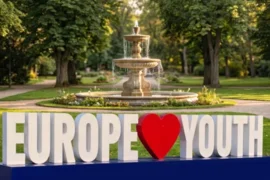
Sport is where so many of us first learn to lead, to fail, to bounce back, and to belong. So when the European institutions start asking young people what the future of European sport should look like - it's worth paying attention. Are they really listening?
Julia Zlatkova, EUSA Vice President for Student Engagement, Youth and Volunteers, and Milia Molinie, EUSA Education Officer, share their common views on the topic after they took part in key youth dialogue platforms in May.
Indeed, across two European cities, Brussels and Strasbourg, and during the same week, young people from all over Europe were invited to do something that doesn't happen nearly often enough: speak directly to the people shaping sport policy.
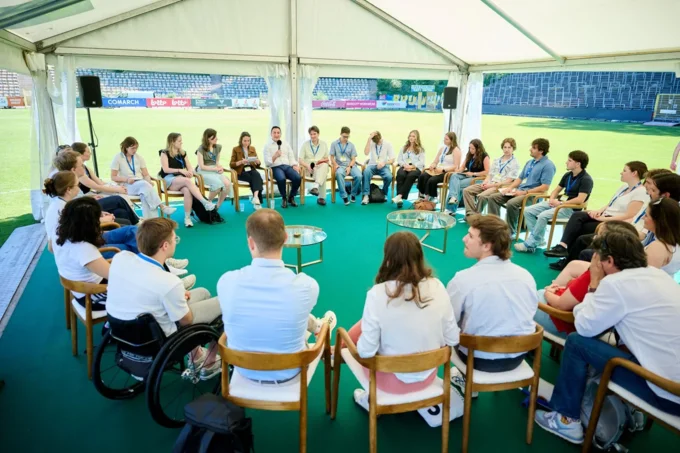
Being one of the contributors to the Youth policy dialogue “A Strategic Vision for Sport in Europe: Reinforcing the European Sport Model" in Brussels (hosted by the European Commission), and to the “Youth Perspective for Safe and Healthy Sport” in Strasbourg (hosted by the Council of Europe), offered a useful moment to reflect on what it actually means to be “youth engaged” in practice:
A recurring observation, both personally and in conversations with peers, is that youth engagement takes time. In a professional context shaped by constant movement between projects, events, and competitions, there is often very little space to truly settle into local environments, or engage with people, and build on the diversity of perspectives around us. We move from one session to another with clear objectives, but rarely with the time to fully benefit from these encounters. This can limit deeper dialogue and shared learning, which are at the heart of meaningful engagement.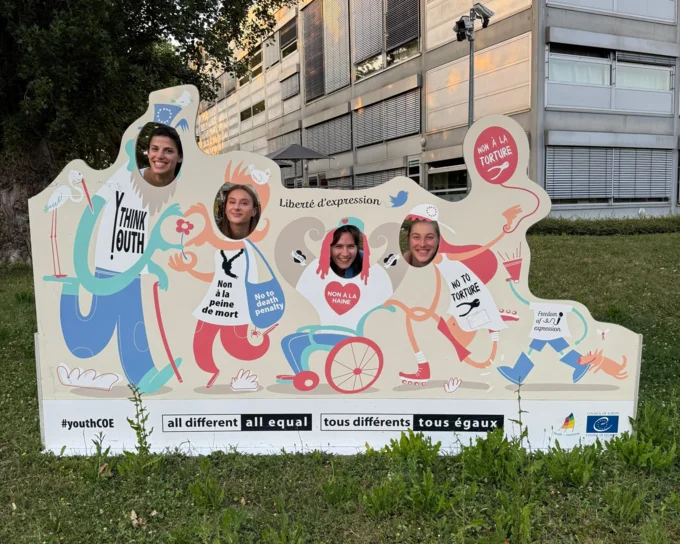
Paradoxically, beyond the intensive sessions in Strasbourg and Brussels, informal conversations created valuable in-between spaces for more open reflection. This was particularly relevant when discussing topics such as safeguarding in sport, which require time, nuance, and careful attention.
More broadly, such dedicated platforms play an important role in creating the conditions for dialogue and mutual understanding. However, we can see a risk in treating “youth” as a category in isolation. Rather than reducing youth participation to a symbolic presence based on age, it is important to recognise the skills, experience, and expertise young people bring. This also raises a broader question for decision-makers and key stakeholders in the sport sector: why does the youth perspective matter in the first place? Asking this question can open more meaningful and grounded discussions. Before expecting institutions and decision-makers to truly listen, similar spaces and dialogue facilitation needs to be created for youth to engage, reflect, and build common ground.
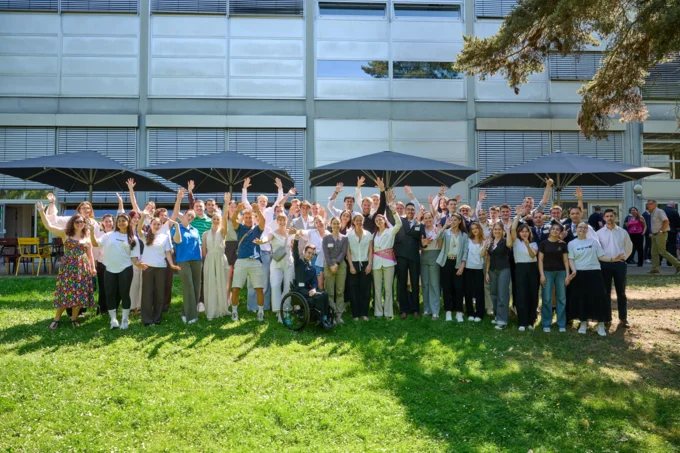
This experience left us with a simple impression: sometimes, a slower pace is what allows for greater impact!
Our contributions from Brussels and Strasbourg led us to one feeling: young people in European sport have a lot to say, and increasingly, places to say it.
That's something worth celebrating. But it also leaves us with a question we want to keep asking, together with every young person who cares about sport in Europe: how do we make sure these conversations don't stop at "thank you for sharing"? How do we turn moments like these into lasting change? We don't have all the answers yet - but we know one thing for certain: the more young people show up, speak up, and stay in the conversation, the harder we become to ignore.
Julia Zlatkova is Vice President for Student Engagement, Youth and Volunteers at EUSA and Chair of the 2026-27 EUSA Student Commission, Engineering student at the Technical University of Sofia. Milia Molinie is Education Officer at EUSA, graduate with a Master degree in International cooperation and development from both Sciences Po Bordeaux, France and University of Turin, Italy.
Are you a student with an opinion? EUSA is looking for contributors for the What's Up column every month. Contact stc@eusa.eu to share a piece or propose a topic.