
EUSA Institute General Council Meeting held in Slovenia
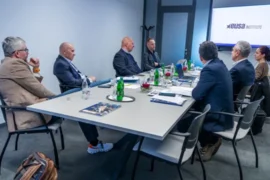
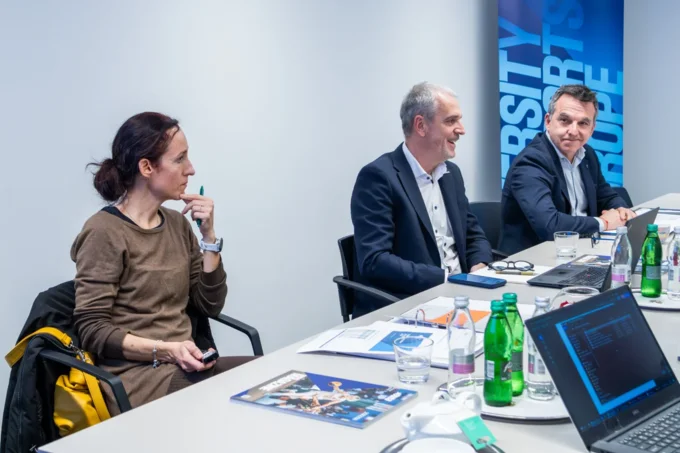
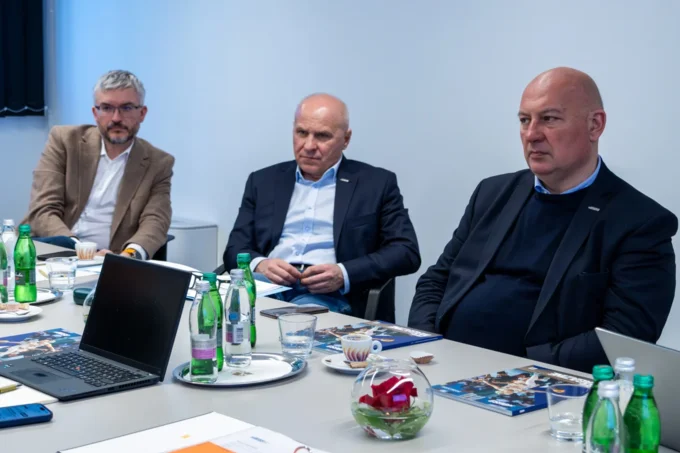
Ahead of the upcoming EUSA Executive Committee Meeting, on March 19, the EUSA Institute General Council convened in Brdo pri Kranju to review the 2025 activities and plans for 2026.
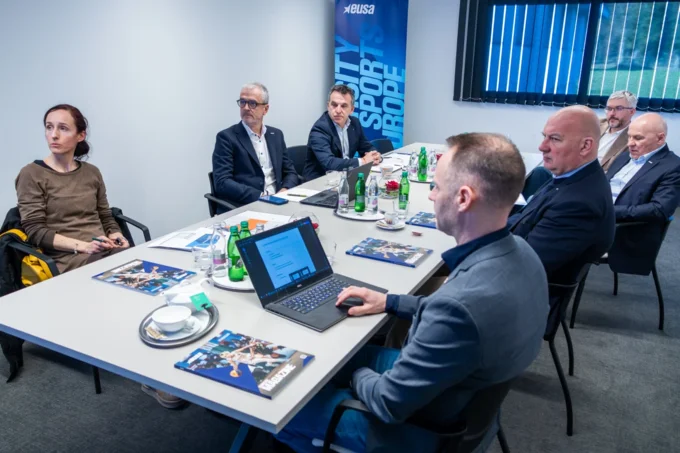
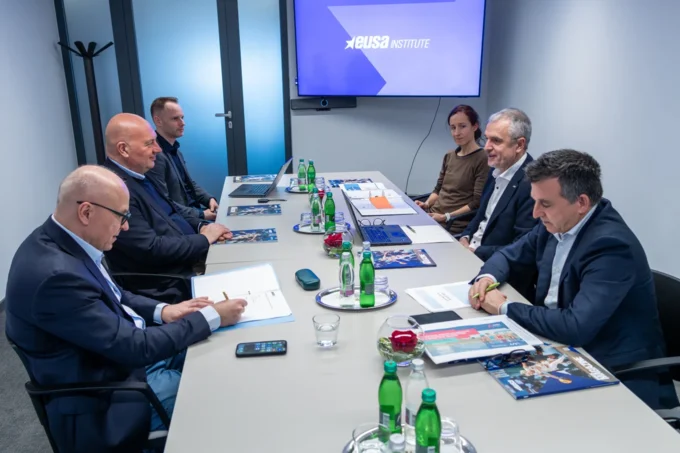
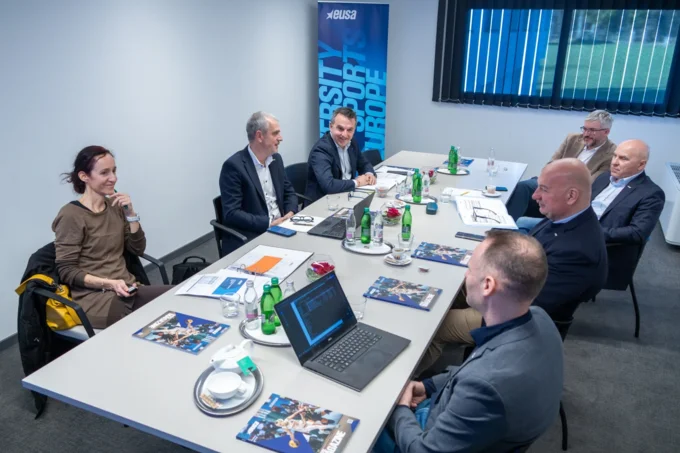
Present at the meeting were EUSA Honorary President Adam Roczek as the Chair of the Council, EUSA Secretary General Matjaz Pecovnik, Treasurer Francis Cirianni, Executive Committee Member Aitor Canibe Sanchez, Director of Projects and Policy Andrej Pisl - as council members. The meeting was also attended by the EUSA President Haris Pavletic and Head of Finance Katja Dolinsek Zajc.
At the meeting, the Activity Report and Annual Accounts for 2025 were presented, along with the Activity Plan for 2026 and the Provisional Budget for 2026, outlining the Institute’s ongoing activities, financial framework, and planned developments for the coming year.
The EUSA Institute enters 2026 with a strong and diverse portfolio of activities, continuing its mission to support the development of university sport and social impact initiatives across Europe.
At the start of the year, the Institute is involved in 14 projects co-funded by the European Union through programmes such as Erasmus+, the European Solidarity Corps, and CERV, with seven of these projects led directly by the Institute and the remaining implemented in partnership with international organisations. Building on the success of previous years, the Institute continues to submit new project proposals and strengthen cooperation with its members, associate members, and strategic partners, ensuring sustained growth and innovation in its activities.
The Institute’s work in 2026 focuses on several key areas, including good governance in sport, mental and physical health, skills development, safeguarding, sustainability, volunteering and youth mobility. Among the main projects coordinated by the EUSA Institute are DiscoverU, which promotes dual careers and increased participation of students in sport; FUSION, which supports student-athletes during and after their studies to prevent dropout from sport; and ESSEPA, which aims to create safer sporting environments by equipping stakeholders with safeguarding knowledge and tools.
In addition, the Institute continues to implement European Solidarity Corps volunteering projects, hosting international volunteers in Ljubljana who contribute to daily operations and major events, as well as Youth Exchanges and mobilities of youth workers.
As an active project partner, the Institute is also engaged in several important European initiatives. These include EUYouSport, which strengthens youth participation in sport governance; Runners4All, which last year successfully brought together more than 1,900 students from 34 countries through inclusive running events; YouthSportCV, focusing on improving employability by recognising skills gained through sport; Give Sport a Say, which promotes civic engagement and democratic participation; and Cycle2Connect, encouraging sustainable mobility through cycling activities.
Furthermore, initiatives such as the European Week of Winter Sport highlight the importance of physical activity while raising awareness about sustainability and climate change.
Throughout the year, the Institute will organise and support a wide range of activities, including international conferences, workshops, educational programmes and sports events, also linked to the programme of the European University Sports Association.
A significant highlight of 2026 will be the continued involvement in the European Universities Games in Salerno, where several project activities are expected to culminate. Youth engagement remains a central priority, with opportunities provided through volunteering, youth exchanges, and Erasmus+ traineeships, all aimed at developing skills, fostering intercultural understanding, and strengthening solidarity among young people.
With its ongoing projects, established partnerships, and continued support from European programmes, the EUSA Institute is set to continue its activities in 2026, contributing to the development of university sport and youth engagement in Europe.