
EUSA Forum 2026: Empowering University Sport
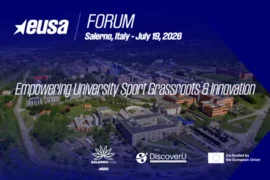
As the European Universities Games filled the region with competitive energy, international policymakers, academic leaders, and sports executives gathered at the University of Salerno Theatre on the Fisciano Campus for the EUSA Forum 2026.
Under the theme of “Empowering University Sport: Grassroots & Innovation,” the event quickly shifted from a simple celebration of athleticism into an action-oriented policy discussion.
The Forum was moderated by Andreas Csonka, EUSA Executive Committee Member, who guided the discussions throughout the programme. Bringing together representatives from universities, university sports organisations, and international partners, the Forum focused on how university sport can better respond to the evolving needs of student-athletes. The discussions were built around four key questions, exploring the changing needs of students, the practical approaches that have proven effective, the shared responsibilities of different stakeholders, and the ways progress can be measured.
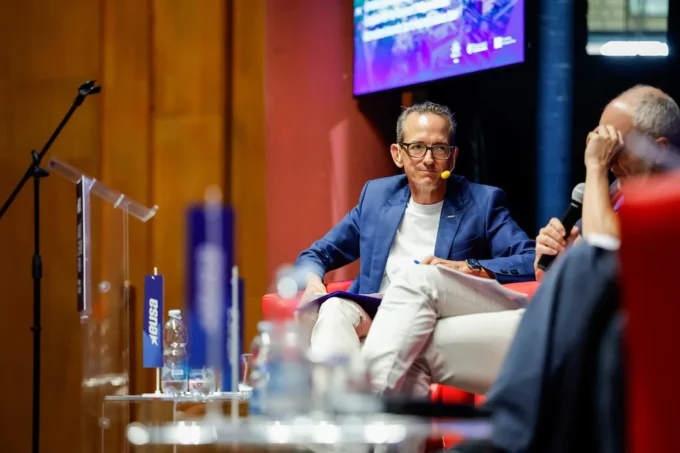
From the opening remarks, the Forum set a collaborative and solution-oriented tone, encouraging participants to exchange experiences, share good practices, and identify practical ways to strengthen the future of university sport.
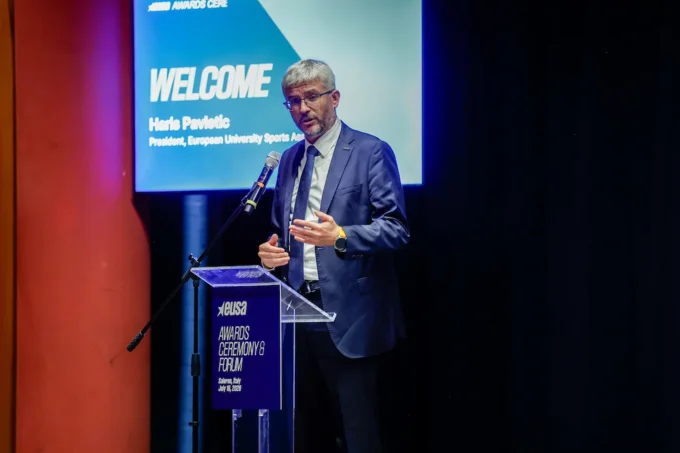
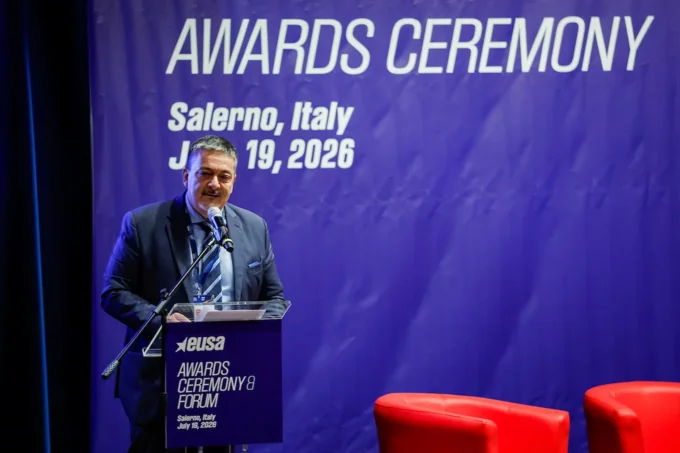
Haris Pavletic, President of EUSA, opened the Forum by welcoming the participants and highlighting the important role of university sport in supporting students' health, education, and personal development, while outlining the priorities of EUSA's 2025-2029 strategic vision.
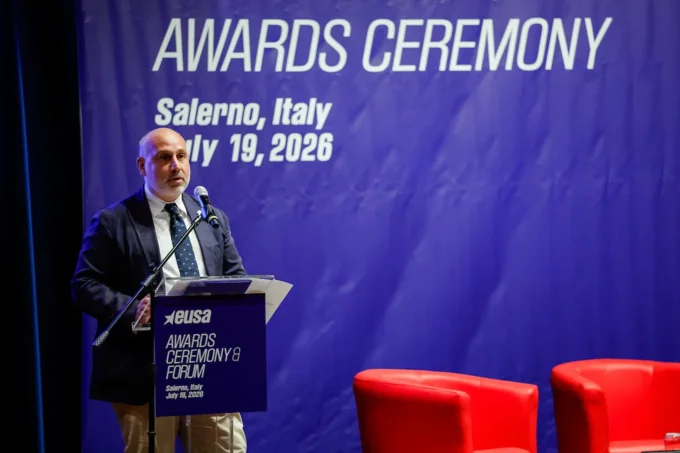
This sentiment was echoed by Prof. Virgilio D’Antonio, Rector of the University of Salerno, who highlighted how the host university actively embeds sport into the fabric of campus life, and Lorenzo Lentini, President of CUS Salerno, who emphasised the regional and international cooperation that turned Salerno into an international university sport host.
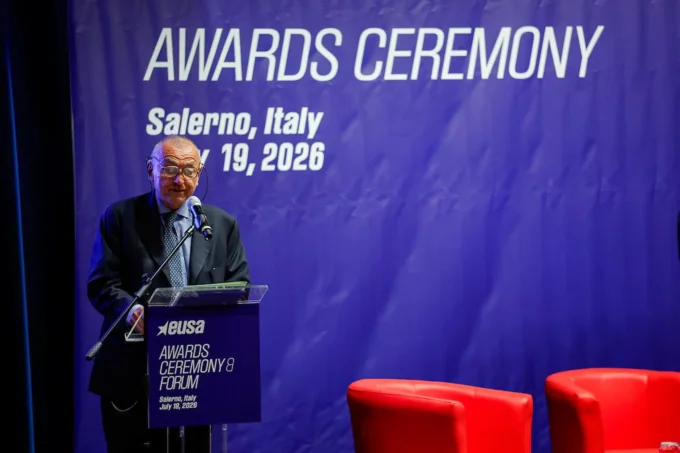
Setting the values baseline and the relevance of the European Sports Charter, Antonio Parrilla, Italy’s representative on the Council of Europe’s EPAS Governing Board Bureau, reminded delegates that sports policy is never neutral: integrity, inclusion, and human dignity must directly influence everyday structural funding and institutional accountability.
The first panel of the Forum transitioned from the opening remarks to a discussion on evidence gathered from national university sports systems and European initiatives, and specifically highlighting experiences of the DiscoverU project. Moderated by Andrej Pisl, EUSA Director of Projects and Policy, the panel brought together a diverse group of experts to examine the challenges facing university sport today, with a particular focus on understanding the evolving needs of students and identifying practical approaches to improving participation, wellbeing, and support across higher education.
The Forum's first panel discussion on the future of inclusive and sustainable university sport featured Liam Smith, EUSA Director of Sports Events, alongside Marija Panijan from the Croatian Academic Sports Federation, Marianna Pikul from the University Sports Association of Poland (AZS), Peter Juhasz, Secretary General of the Hungarian University Sports Federation (MEFS), and Vincenzo Cusati, Sport Educator and Mental Coach from CUS Salerno.
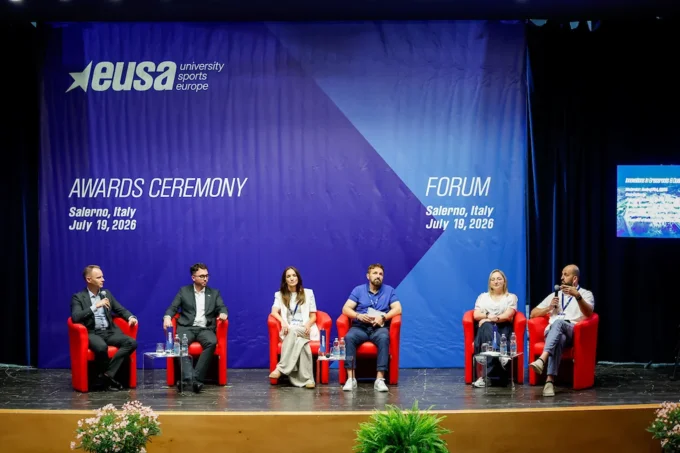
The panel examined innovative sports formats and volunteer pathways that have successfully attracted new audiences, while also considering which dual-career practices can be transferred across different national contexts and what policy and institutional conditions are needed to support their wider implementation. The discussion further focused on identifying evidence, tools, and good practices that EUSA could scale across its member organisations. Drawing on their respective expertise, the panellists highlighted the importance of innovation, grassroots engagement, international cooperation, supportive policy frameworks, and mental well-being, with particular emphasis on mental coaching, trust-building, and proactive stress management as key elements in preventing academic and athletic dropout.
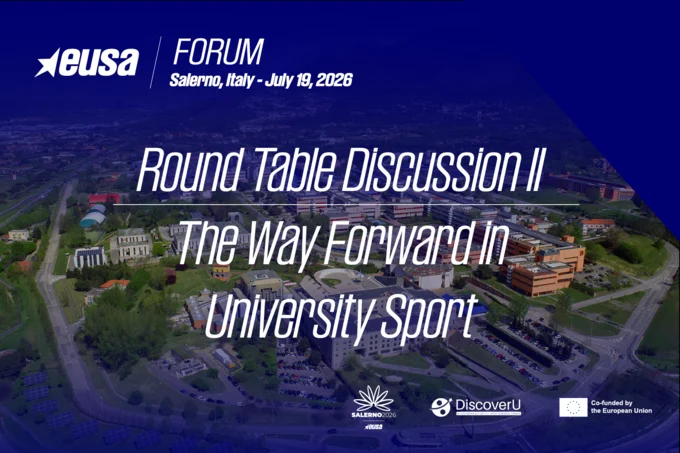
The second round table brought, Bruno Barracosa, EUSA 1st Vice-President and former President of the Portuguese University Sports Federation, Prof. Francesco Paolo Adorno, Rector's Delegate for University Sports Policy and Relations with CUS at the University of Salerno, Prof. Laura Capranica, President of the European Athlete as Student (EAS) network, Philippe Housiaux, President of the European Fair Play Movement (EFPM), and Leonz Eder, President of the International University Sports Federation (FISU), who came together for a panel discussion on strengthening the long-term impact of university sport through institutional cooperation.
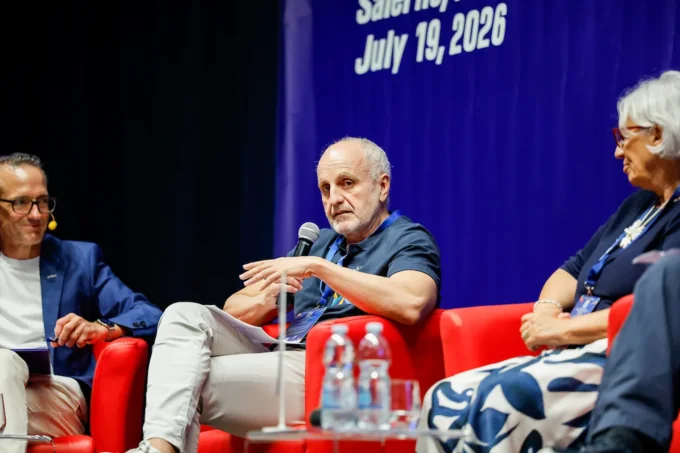
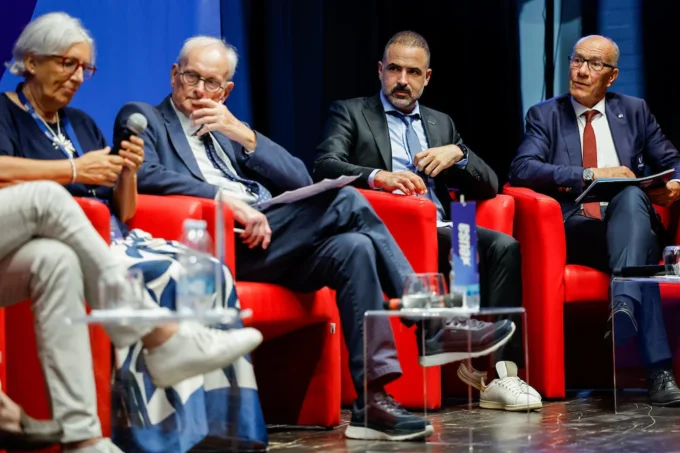
The panellists discussed which policies, services, and standards should be shared across Europe and which should remain tailored to national and local contexts, while exploring how universities can immediately strengthen the compatibility of sport, study, and wellbeing through transparent institutional practices. The discussion also addressed the implementation of effective dual-career policies, emphasising equal academic opportunities for student-athletes regardless of their field of study, alongside the role of fair play, safeguarding, and ethical governance in creating supportive environments. Concluding with a broader perspective, the panel examined how responsibilities should be shared between universities, national university sports associations, EUSA, and FISU to ensure synergies in action, measurable progress, and sustainable development across the university sport movement.
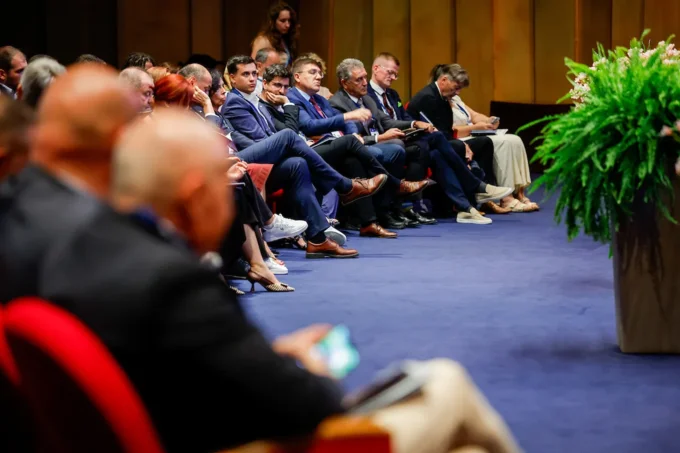
The EUSA Forum 2026 concluded by reaffirming the important role of university sport in supporting students both on and off the field of play. Through insightful discussions and the exchange of experiences between experts, university representatives, sports organisations, and student support professionals, the Forum highlighted the value of collaboration, innovation, and shared learning in shaping the future of university sport. As participants look ahead, the ideas and good practices presented in Salerno will continue to inspire efforts to create more inclusive, supportive, and sustainable opportunities for student-athletes across Europe and beyond.
This year's EUSA Forum was part of the Discovering University Sport and Dual Career (DiscoverU) project, co-funded by the European Union.