
EUSA-EUG 2026 Convention held in Salerno
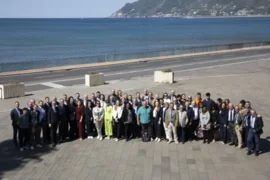
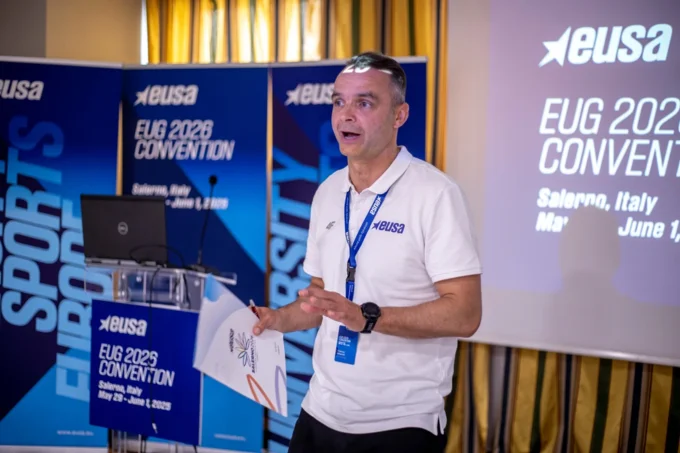
Between May 29 and 31, the EUSA-EUG 2026 Convention took place in Salerno, Italy.
The event was organised by the European University Sports Association (EUSA) and the local organising committee of the European Universities Games Salerno 2026 (EUG 2026).
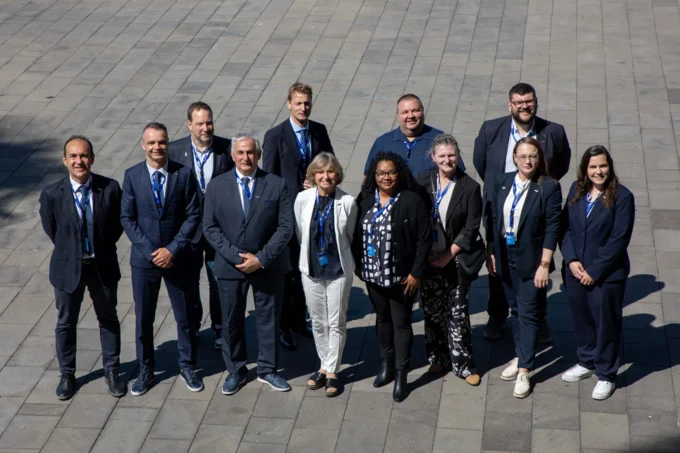
EUSA was represented at the event by members of the EUSA Office and EUSA Technical Delegates. The European Universities Games Salerno 2026 (EUG 2026) were represented by members of the Organising Committee, National Technical Delegates, and representatives of the University of Salerno and CUS Salerno.
The event was also attended by representatives of the previous European Universities Games Debrecen-Miskolc 2024 (EUG 2024), as well as the upcoming ones in Split 2028 (EUG 2028) and Granada 2030 (EUG 2030).
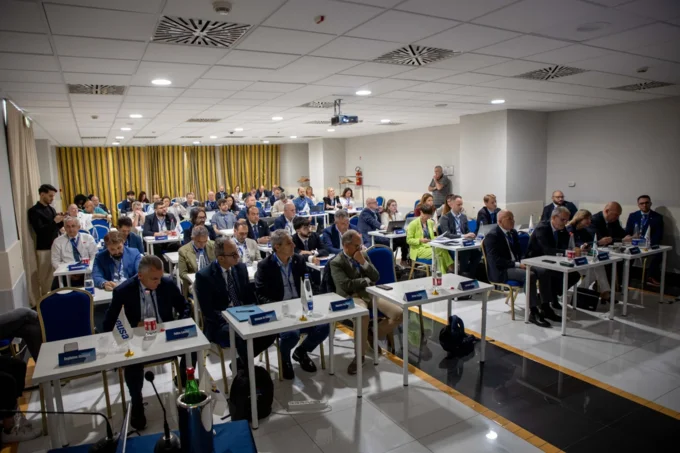
After the arrival of participants on May 29, the programme officially kicked off on May 30.
On Friday, 30 May, activities took place at the Grand Hotel Salerno, starting with internal parallel meetings. These included a welcome meeting for the EUSA Office and EUSA Representatives by EUSA Technical Commission Chair Ivana Ertlova, and a separate welcome meeting for the EUG 2026 Organising Committee and National Technical Delegates held by CUS Salerno.
The EUSA–EUG 2026 Convention then continued with welcome messages delivered by representatives of both EUSA and the EUG 2026 Organising Committee at the beginning of a joint main session.
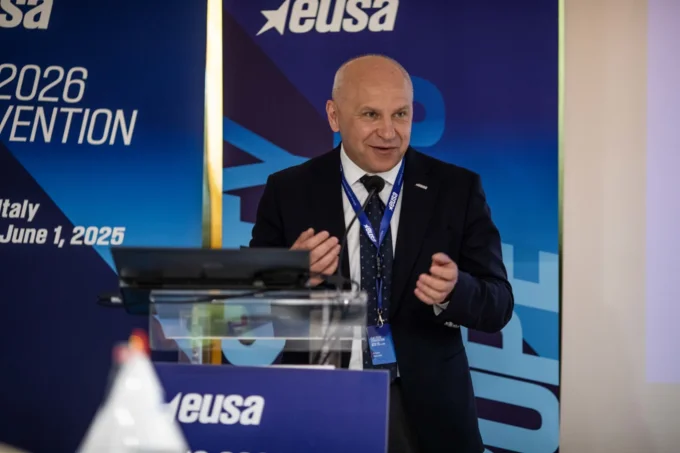
EUSA President Adam Roczek, CUS Salerno President Lorenzo Lentini, and the University of Salerno Director General Attilio Riggio welcomed all participants and wished them a fruitful and productive convention.
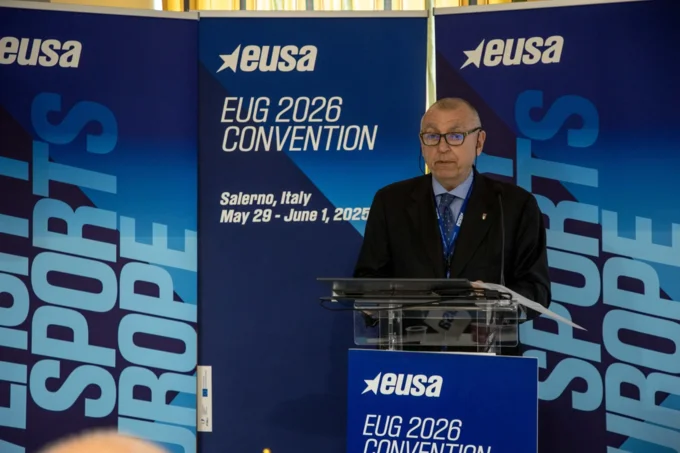
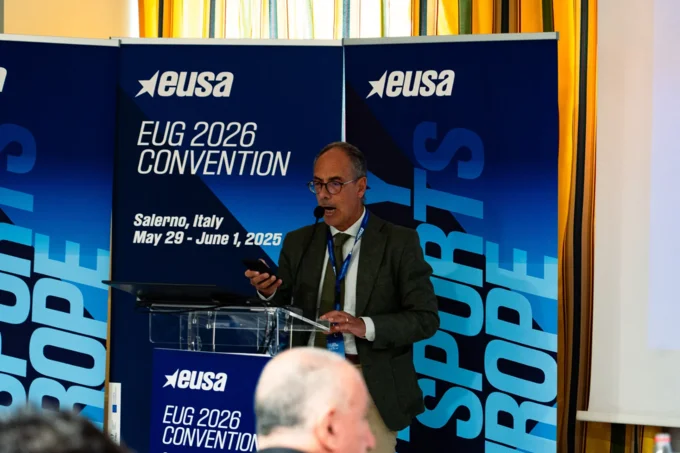
The convention sessions were moderated and conducted by EUSA Sports Events Director Liam Smith.
Matjaz Pecovnik, EUSA Secretary General, introduced the EUSA, outlining its structure, core mission, and the role it plays in promoting university sport across Europe. He highlighted EUSA’s commitment to fostering values such as inclusion, fair play, and academic-athletic balance, while also emphasising the importance of collaboration between member federations, host cities, and organisers in delivering successful sports events like the European Universities Games. His introduction set the tone for the convention, reinforcing EUSA's strategic vision and the significance of EUG 2026 within that framework.
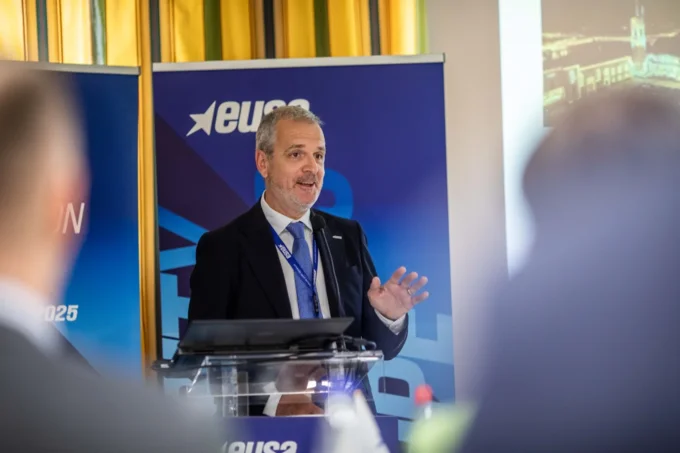
EUG 2026 Organising Committee delivered a general progress report on the preparations for the upcoming European Universities Games in Salerno, with a presentation by CUS Salerno Secretary General Michele Di Ruocco.
The presentation provided a comprehensive overview of key developments, including updates on infrastructure, venue readiness, logistics, and coordination with local stakeholders. The Organising Committee highlighted milestones already achieved, outlined the upcoming phases of implementation, and addressed both opportunities and challenges encountered so far. Special emphasis was placed on the collaborative efforts between the local authorities, universities, and EUSA to ensure the successful delivery of the event, with a strong focus on sustainability, inclusivity, and legacy planning.
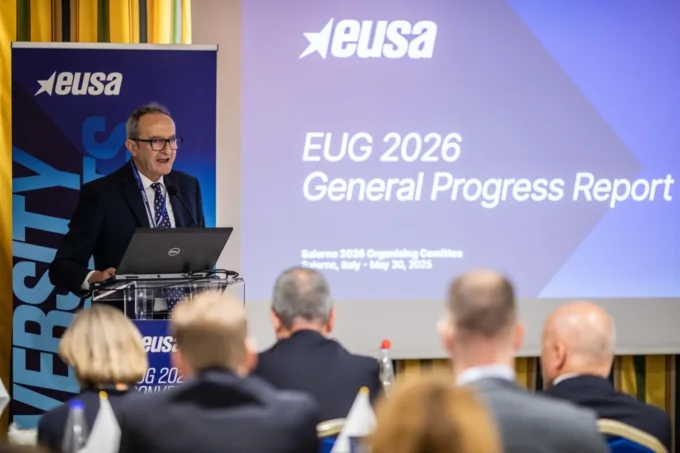
The convention resumed with a presentation on the roles of EUSA Representatives - including SCAC, CTC Chairs, Medical and Communications Commissions, and Technical Delegates - by Liam Smith.
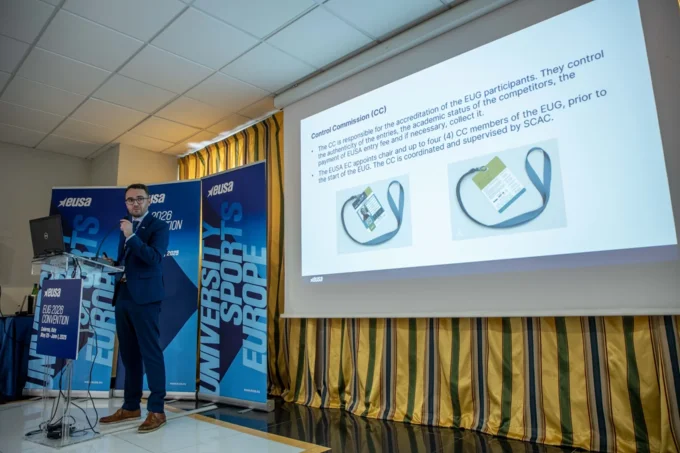
EUSA Sports Manager Miha Zvan then presented the programme agenda, the technical commission and the EUSA Operational Documents 2026. He also gave an introduction to this year’s European Universities Championships and next year’s European Universities Games.
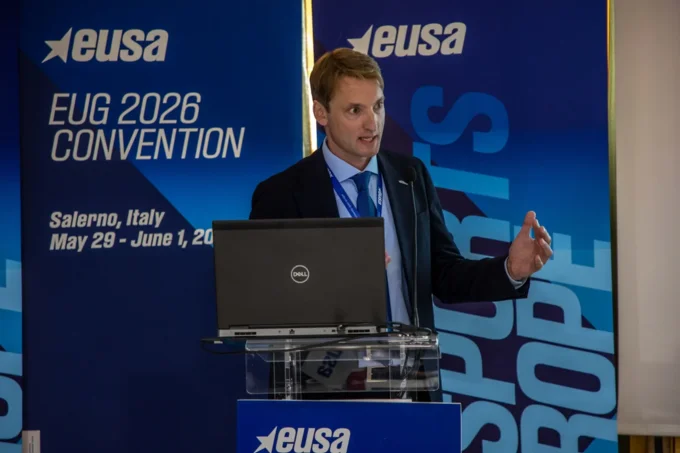
In continuation, University of Salerno representative Gaetano De Stefano introduced a programme presentation with a comprehensive overview of the University of Salerno facilities which will play a key role during next summer's event, focusing on the specificities and highlights of both campuses of Fisciano and Baronissi.
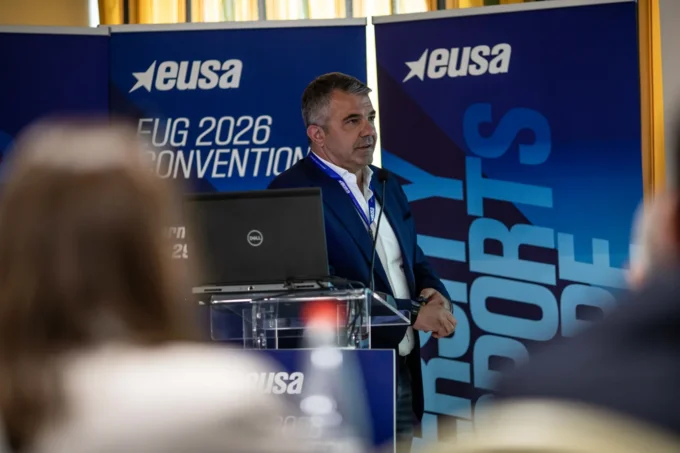
The OC gave an introduction to the sports programme of the European Universities Games 2026, made by CUS Salerno Sports Director Guglielmo Mazzotti. The presentation covered the locations, capacities, and planned upgrades of each facility, as well as their alignment with technical requirements set by EUSA.
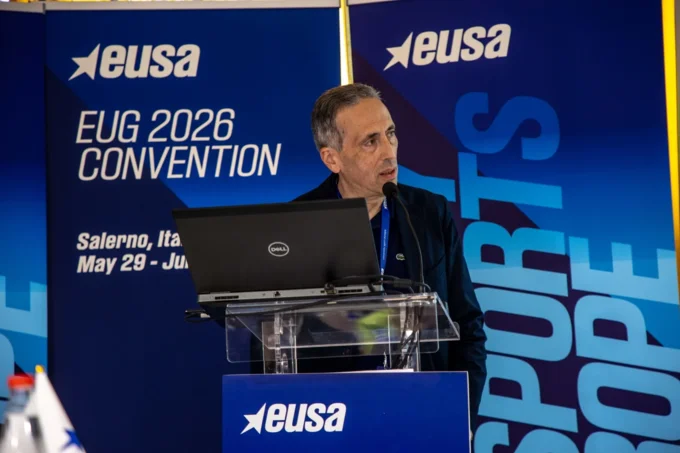
Aleksandra Andreeva, EUSA Sports Administrator, concluded the morning session with a presentation on registrations and accreditations, unveiling several critical and crucial aspects, as well as potential issues to be encountered in these peculiar but essential areas.
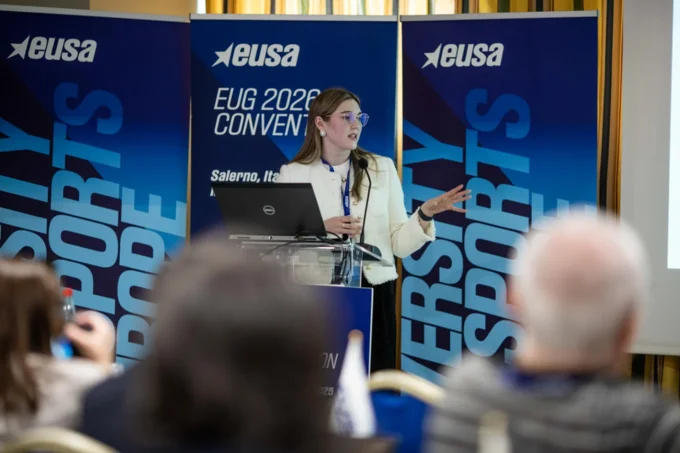
The afternoon session began with a presentation by Natasa Jankovic, EUSA Consultant, who introduced the Volunteers and Observer Programme. She highlighted the essential role volunteers play in the successful execution of the Games, not only in supporting operations but also in creating a welcoming and vibrant atmosphere for participants and guests.
Ms Janković outlined strategies for recruitment, training, and engagement of volunteers, while also emphasising opportunities for skill-building, intercultural exchange, and long-term involvement in university sport. The Observer Programme was presented as a key learning platform for future organisers, offering participants valuable insights into the structure, logistics, and challenges of hosting large-scale events.
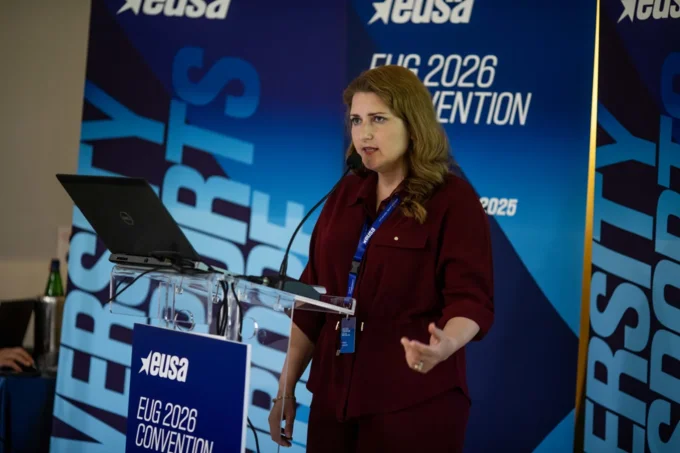
Following this, Sara Rozman, EUSA Director of Education & Operations and COO, provided an overview of the protocol procedures that will guide official ceremonies, VIP management, and event formalities during EUG 2026. Her presentation underscored the importance of upholding traditions while ensuring smooth coordination and respectful representation of all delegations. She outlined the key components of protocol for the opening, closing, and award ceremonies, stressing the importance of aligning with EUSA’s official protocol standards and guidelines. Her presentation highlighted the need for clear planning, appropriate stage arrangements, and dignified recognition of athletes and teams.
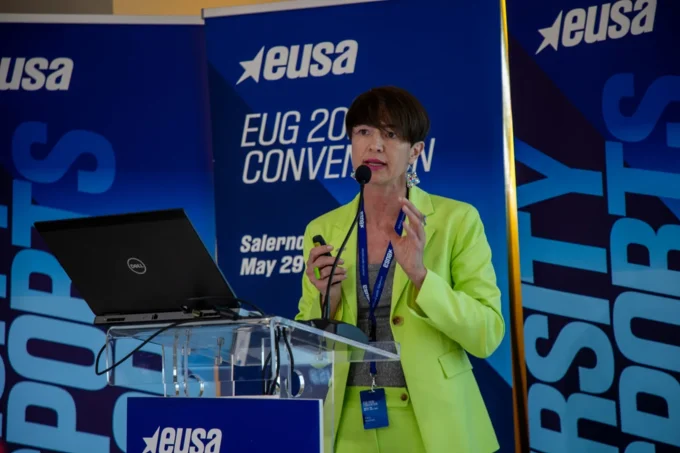
The final presentation of the day was delivered by Salvatore Sisca, EUSA Head of Media and Communications, who introduced the visual identity and communication strategy guidelines for the Games. A broader media and marketing approach, covering topics such as live streaming, content creation, and best practice examples from past editions was discussed. He emphasised the importance of storytelling and engagement through digital platforms to reach a wider audience. The branding of competition venues, integration of marketing materials, and development of official mascots and merchandise were also highlighted as essential tools for building excitement and visibility ahead of the Games and during the event.
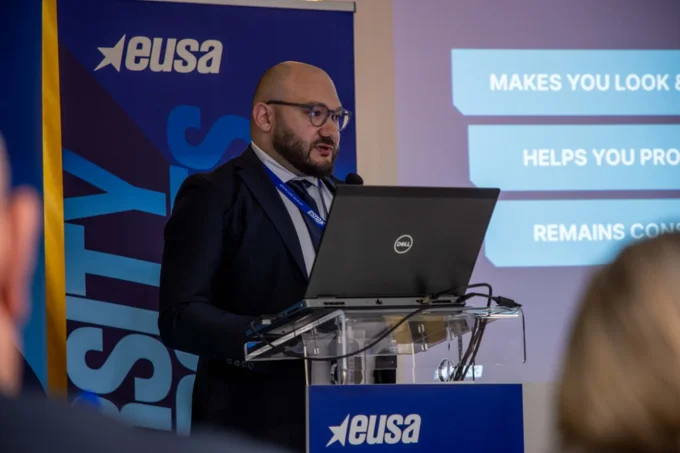
The afternoon continued with a dynamic session titled EUG Good Examples – Presentations and Q&A, where representatives from upcoming and past editions of the European Universities Games shared best practices and innovative approaches.
The EUG 2024 team highlighted the success of their fun zone concept and the importance of a strong relationship with their National Sports Federation (NSF), with a presentation made by Hungarian University Sports Federation Secretary General Peter Juhasz.
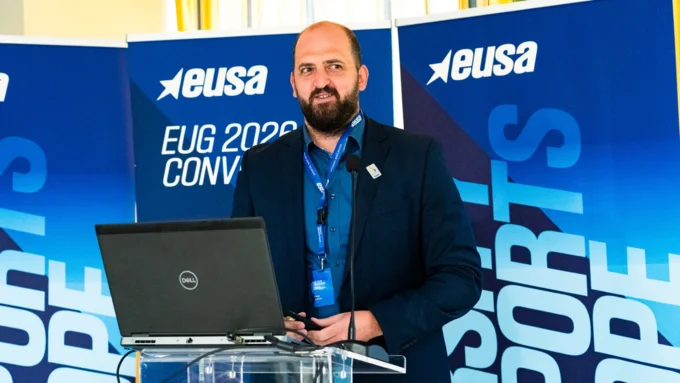
EUG 2028 presentation focused on strategies for effective live streaming and impactful social media engagement, while EUG 2030 shared their plans related to sustainability, mascot development, and increasing brand awareness. This exchange of experiences and progress in preparations offered valuable insights and inspiration for the EUG 2026 organisers.
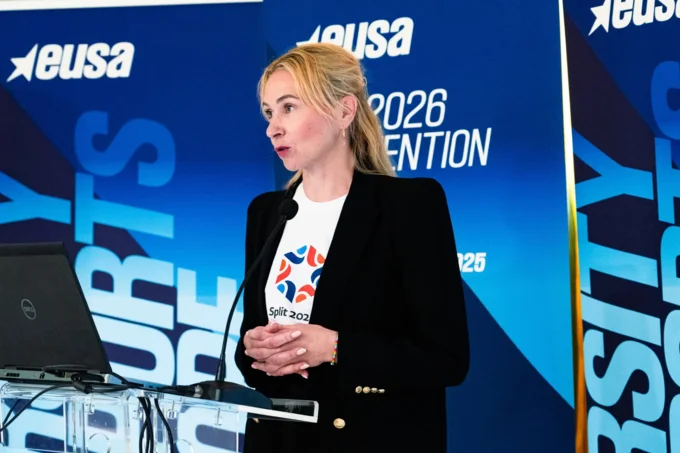
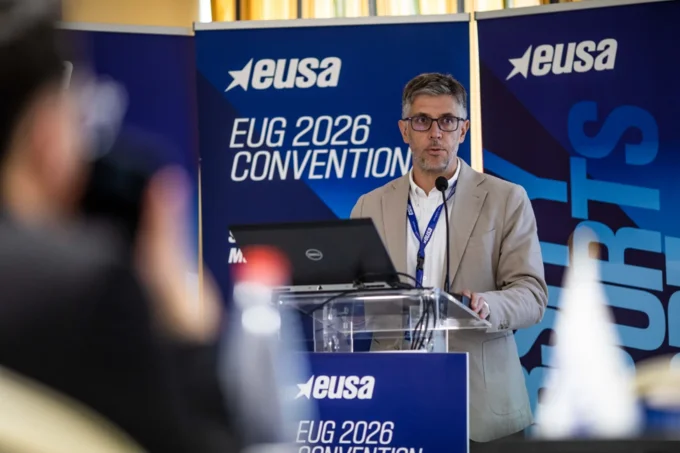
The session concluded with a brief presentation providing practical information regarding the next day’s programme.
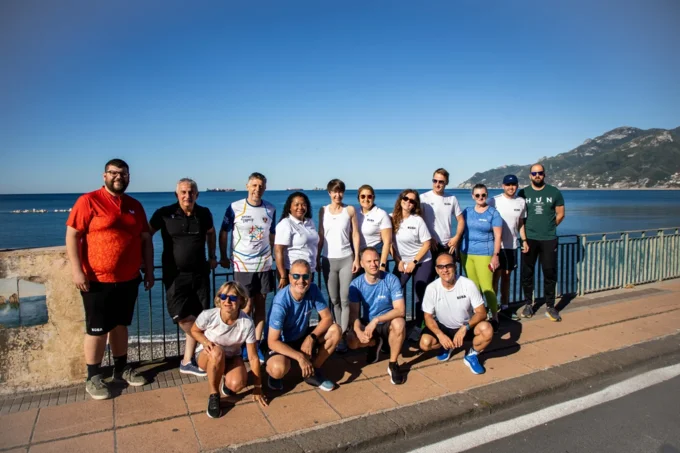
On Saturday, 31 May, the day began early with a #BeActive walk or jog, encouraging participants to start the day with physical activity.
To advance the programme, key stakeholders - including EUSA Technical Delegates, National Technical Delegates, and representatives from the EUG 2026 Organising Committee’s Sports Department - undertook comprehensive inspections of the designated sports venues. These detailed assessments ensured that each facility met the technical standards and logistical requirements essential for the successful delivery of the Games.
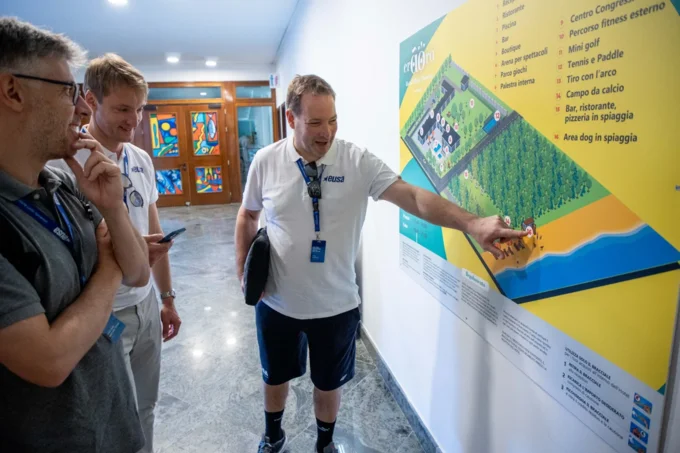
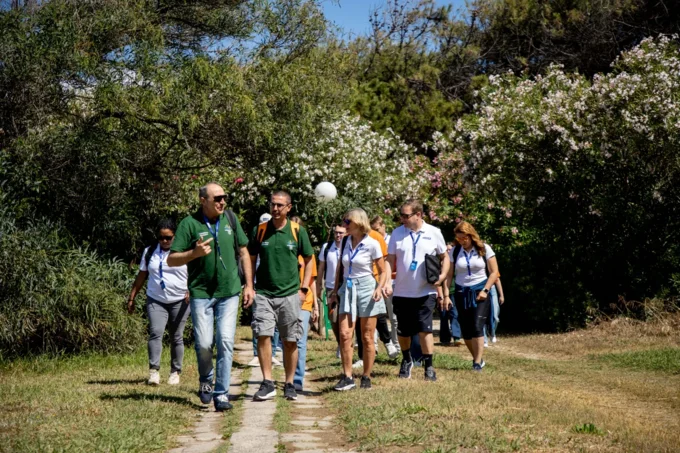
Concurrently, several travelling specialised working groups convened to address critical operational areas. These included media, communications, and visual identity; registration and accreditation processes, accompanied by an accreditation site inspection; and a combined functional group focusing on volunteers, protocol, and project management. These sessions facilitated in-depth discussions and strategic planning to align all aspects of event preparation.
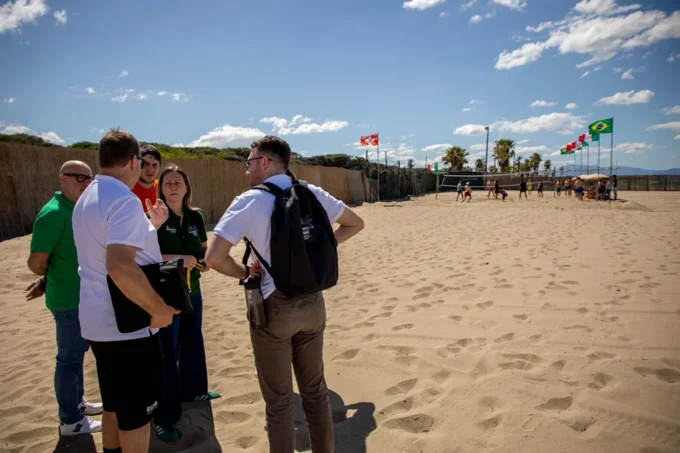
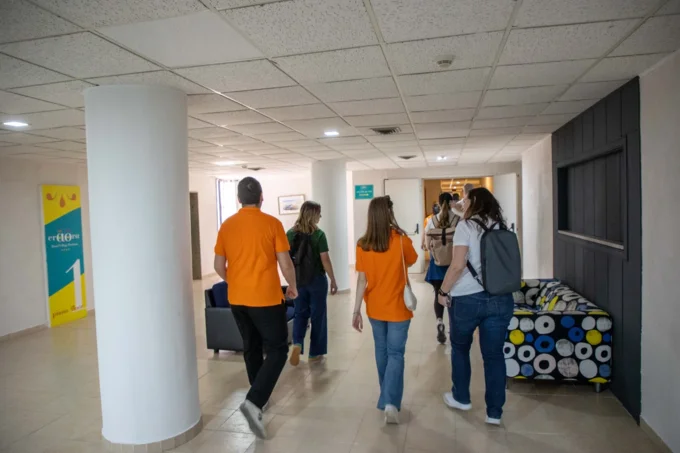
The afternoon session was dedicated to the continuation of venue inspections and the systematic preparation of inspection reports, consolidating observations and recommendations for further action.
The day concluded with a series of evaluative meetings where the internal inspection reports were thoroughly reviewed by the EUSA Office and Technical Delegates. This was followed by a collective session involving all participants to present final conclusions, exchange feedback, and ensure consensus on the next steps for the organisation and execution of the Games.
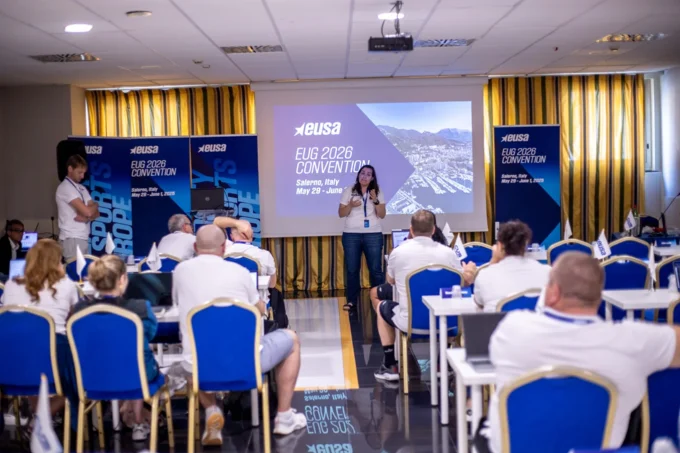
Overall, the event demonstrated strong collaboration, good preparation, and a shared commitment among all stakeholders to deliver a successful and memorable European Universities Games in Salerno 2026 from July 18 to August 1.
For all information about the EUG 2026 please visit the official event website eug2026.eu.