
EUG 2026 educational programme wraps up
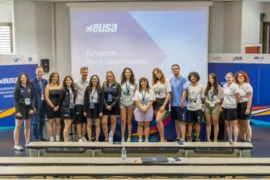
Ahead of the finals in the remaining sports at the European Universities Games 2026 in Salerno (EUG 2026), educational activities which have been actively implemented as one of the fundamental pillars of the European University Sports Association (EUSA), have now concluded.
Following the first week of thematic sessions and the EUSA Forum, the second week of the educational programme has also been completed, hosted on the main campus at the University of Salerno (UNISA). From July 27 to July 30, student-athletes, officials, volunteers, and experts engaged in interactive workshops, panel discussions, info stands, and health initiatives. These sessions explored youth mobility, human rights, inclusion, sports innovation, European citizenship, and preventative health.
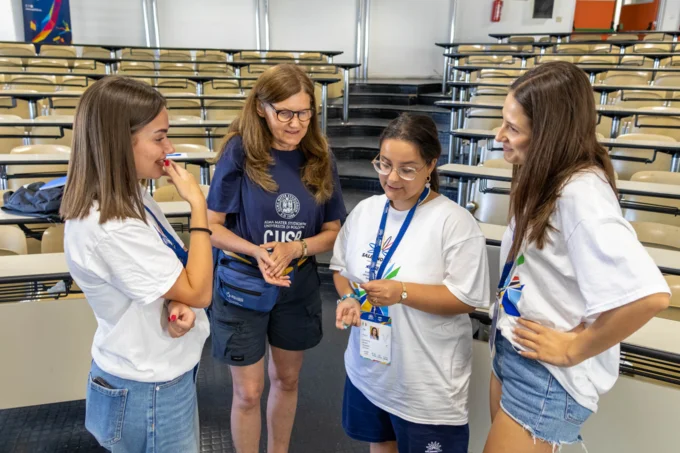
To wrap up the second half of the educational programme at the EUG 2026, several key themes and activities highlight EUSA’s strategic priorities, representation, and project contributions:
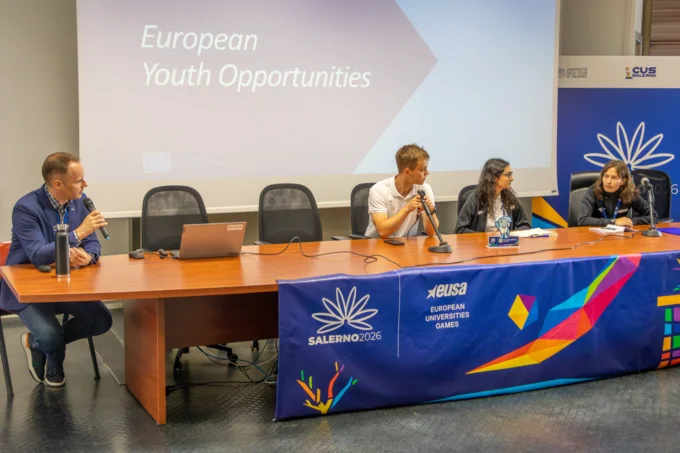
Youth Mobility, Skills, and Empowerment: Focusing on opportunities and mobilities for young people co-funded by the European Union, Monday’s session on Youth Opportunities highlighted the European Solidarity Corps (ESC) and Erasmus+ Key Action 1 mobilities in the field of education, youth, and sport. The session was moderated by EUSA Director of Projects & Policy Andrej Pisl and featured an all-EUSA panel: Milia Molinie (EUSA Education Officer), Milena Alessandria (EUSA ESC volunteer), and Wiktor Makowski (EUSA Student Commission member and international volunteer at the EUG 2026). Together, they shared personal experiences, practical insights, and guidance on how international mobility enhances skills and employability for young people in sport.
Human Rights, Inclusion, and Diversity in Sport: Tuesday’s programme emphasised social responsibility and equity through two complementary sessions:
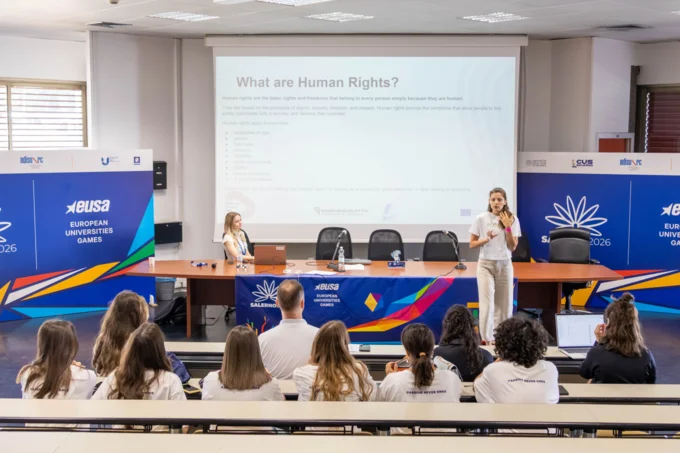
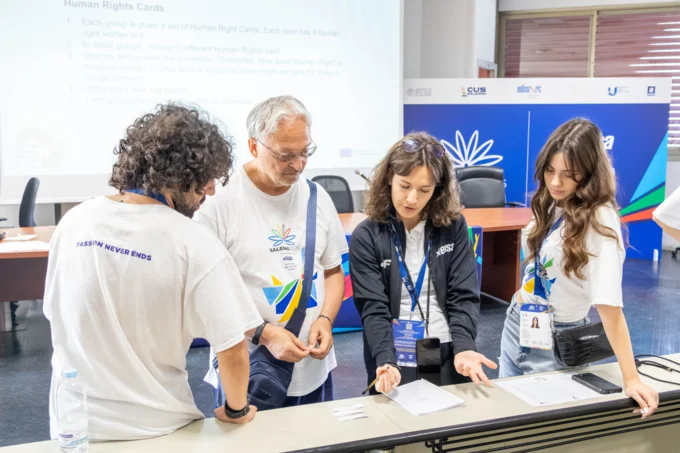
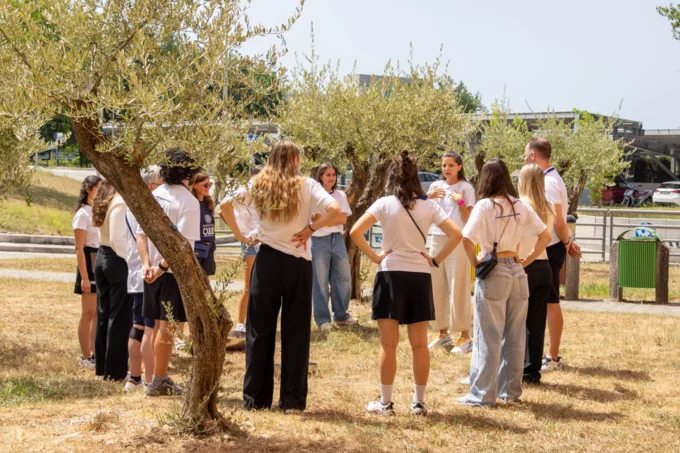
The Human Rights Through Sport workshop, led and implemented by ENGSO Youth, provided an interactive space where participants were introduced to key principles before exploring fairness and non-discrimination through practical games and collaborative exercises. This allowed young leaders and also more seasoned participants to voice their perspectives on human rights in sport.
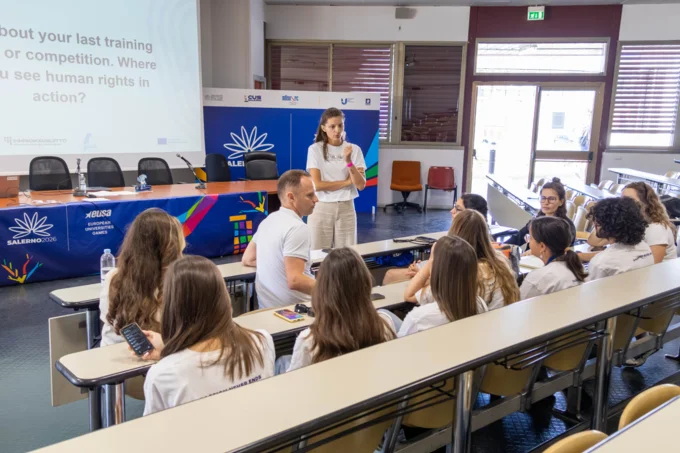
The panel on Discrimination in Sports and Vulnerable Categories took a multidisciplinary approach, connecting four main thematic areas: Rights, Participation and Empowerment in Sport; Gender, Identity and Inclusion in Sporting Cultures; Language, Representation and Power in Sport; and Well-being, Careers and Equal Opportunities in Sport.
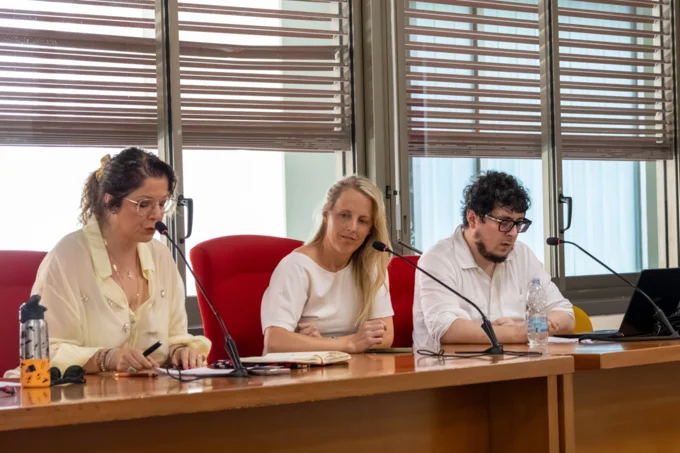
EUSA was represented by Yngvild Larsen Schei, EUSA Executive Committee Member and Chair of the EUSA Inclusion and Diversity Committee, as one of the panellists. She underlined EUSA’s commitment to ensuring sport remains a safe, equitable, and supportive environment for all athletes.
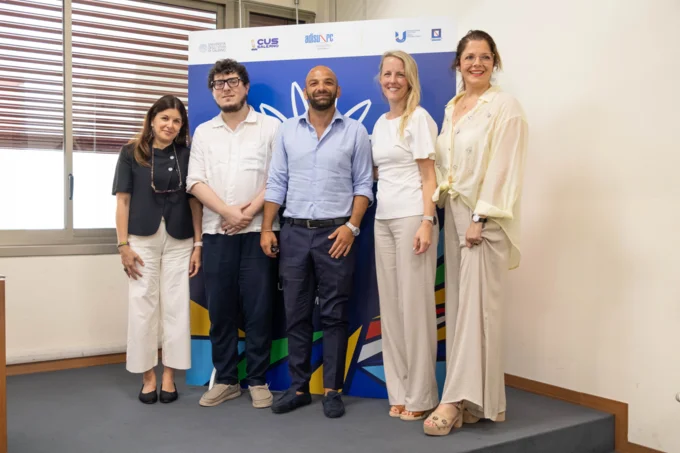
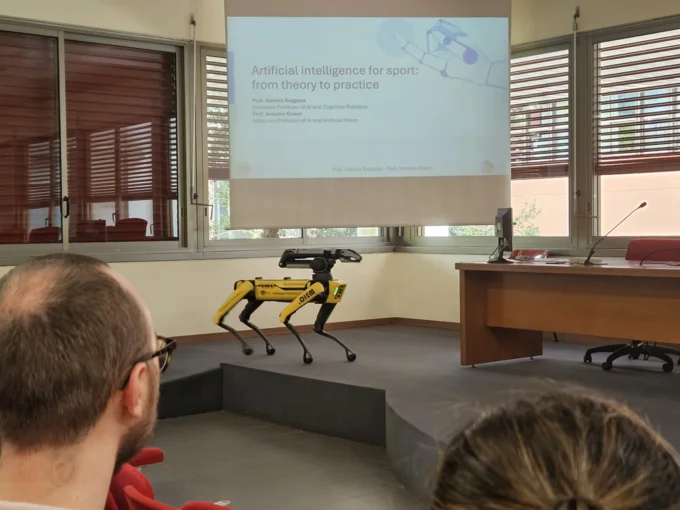
Innovation, Engineering, and Artificial Intelligence: Technology’s role in modern sport was showcased on Tuesday through contributions from UNISA’s Department of Industrial Engineering. In Where Innovation Meets Peak Performance, presenters demonstrated how chemical, mechanical, and electronic engineering drive the future of sports disciplines. Following this, Artificial Intelligence for Sports: From Theory to Practice offered a concrete look at how AI serves as an everyday tool for athletes, referees, clubs, and professionals, culminating in a live practical demonstration featuring an intelligent robot.
European Citizenship and Grassroots Participation: On Wednesday, the interactive Give Sport a Say info stand engaged the campus community. Part of a European cooperation project co-funded under the CERV (Citizens, Equality, Rights and Values) Programme, the initiative is designed to bring citizens closer to the European Union through grassroots sport. Led by OPES in cooperation with EUSA Institute as one of the project partners, the stands allowed participants to test their knowledge of European policies, share feedback, and contribute personal proposals for the future of European sport.
Preventative Health and the Longevity Lands Screenings: Running throughout the Games from July 20 to July 30, a comprehensive preventative health initiative offered free medical screenings to accredited athletes and officials outside the Fisciano Campus Canteen. Specialised screenings covered Cardiology, Dental, Dermatology, Breast/Mammography, Internal Medicine, Urology, and Oncology. Aligned with the longevity ethos of the host region and EUSA’s focus on healthy lifestyles, the initiative encouraged student-athletes, officials and volunteers to combine physical activity and Mediterranean nutrition with preventative care, empowering them to return home as ambassadors of longevity and well-being.
EUSA extends its gratitude to the University of Salerno, partner organisations, medical staff, speakers, and volunteers for their dedication in preparing and hosting these educational activities. By integrating knowledge, dialogue, and prevention into the event experience, the EUG 2026 Organising Committee, EUSA and their partners have successfully fostered a vibrant learning environment alongside the sports competitions at the European Universities Games 2026 in Salerno.