
FADU study explores Portuguese University Sport

FADU Portugal University Sports has presented a national diagnostic study examining the current state of university sport within Higher Education Institutions (HEIs) in Portugal.
The study was officially introduced on March 17 in Lisbon, gathering key stakeholders from across the higher education, sport, and student sectors.
The event brought together institutional leaders, representatives of the national sports system, university sport officials, and members of the student movement. Among those in attendance were FADU President Diogo Salgado Braz and the Portuguese Secretary of State for Higher Education, Claudia Sarrico.

The study provides a comprehensive and data-driven assessment of the structural conditions supporting university sport in Portugal. It focuses on key areas including infrastructure, funding, human resources, institutional prioritisation, and the broader impact of sport on student well-being and integration.
The study is based on a structured questionnaire conducted in February 2026, targeting FADU-affiliated clubs and sports structures across Higher Education Institutions. With 76 valid responses, it covers around 70% of the FADU network and 75% of higher education students in Portugal, including institutions from 16 mainland districts and the autonomous regions of the Azores and Madeira.
Results show that 61% of institutions lack their own sports facilities, and 89% rely on external venues to run activities. Public funding is perceived as insufficient, with an average score of 2.30 out of 5. Many clubs report a shortage of coaches and sports technicians, and limited support for dual career pathways. Despite these gaps, university sport is recognised as important for student well-being, mental health, and integration.
The study underlines the need for dedicated funding for sports infrastructure, better integration of sport into higher education funding, investment in specialised human resources, and the formal inclusion of sport in institutional strategic plans.
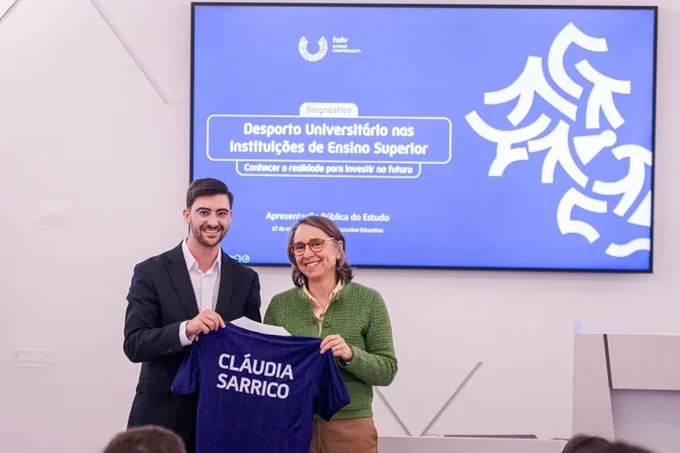
Commenting on the findings, FADU President Diogo Salgado Braz stated: “We are facing a very concerning scenario, which reveals a significant structural gap in university sport in Portugal compared to other European realities.”
He further emphasised that limited funding, inadequate infrastructure, and insufficient strategic prioritisation continue to constrain the sector’s development.
The Secretary of State for Higher Education, Cláudia Sarrico, also underlined the importance of reinforcing the role of sport within higher education systems, particularly in supporting student well-being and institutional growth.